



Ever wondered why you’re seeing fewer new puppies on your street these days? The answer is India’s ABC, the animal birth control programme. It’s quietly changing how our streets look, one neighbourhood at a time.
Picture the scene. A mother nursing her pups behind a parked car. Someone from the colony is quietly feeding the community dogs before the evening walkers pass by.
For years, the default “solution” in many colonies was different. Call the municipal van, have the dogs picked up and dumped somewhere else. Out of sight, out of mind.
That approach doesn’t work. And honestly, it isn’t even legal anymore. India is home to an estimated 6.2 crore street dogs, according to The Tribune, a number that explains why concerns around dog bites and rabies feel so real for many people.
The animal birth control programme works differently. It relies on science, not removal, backed by government data and peer-reviewed research cited throughout this blog. No vans, no relocation, just a slower, steadier fix.
This blog breaks down what the ABC programme for dogs actually involves. It explains what the law requires. And it shows why this remains the only method the Supreme Court and animal husbandry authorities allow.
What is the ABC programme?
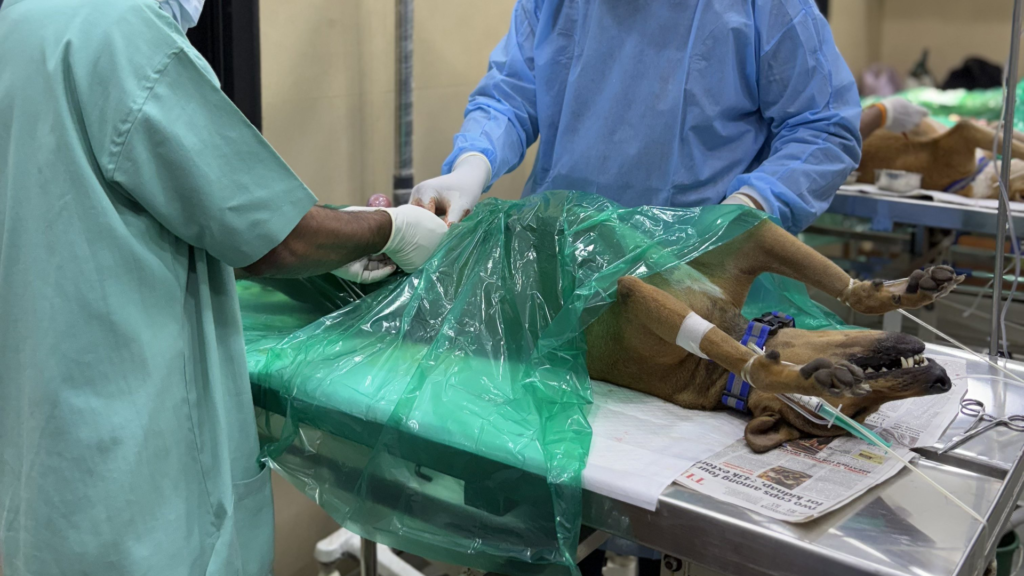
As per the AWBI Project Recognition for ABC, the question “What is the ABC programme?” comes up a lot, and the answer is simpler than the acronym suggests. ABC stands for Animal Birth Control, a system where free-roaming dogs are sterilised and vaccinated instead of being killed, caged, or relocated.
It isn’t a new idea. India has run some version of this programme since the original ABC Rules of 2001, since strengthened by the ABC Rules of 2023, a more detailed set of national rules that govern the programme today. Sterilisation stops the reproduction cycle at its source.
Vaccination is just as important. It protects both the dog and the surrounding community from rabies after a dog bite, one of the biggest public health concerns tied to street dogs.
Releasing it back to its original location keeps the dog’s territory stable. A settled dog holds its ground, and that stability reduces new dogs from migrating in to fill the gap.
Why sterilisation instead of culling or relocation?
Culling and mass relocation both fail for the same reason: they create empty territory. When dogs are removed from an area, unsterilised dogs from nearby zones move in to take advantage of the same food and shelter, and populations rebound to near pre-removal levels within a matter of months.
The World Organisation for Animal Health has been explicit on this point. Its technical guidance does not treat culling as a workable or lasting way to manage free-roaming dog numbers. A peer-reviewed study in Scientific Reports echoes this: researchers note that culling tends to leave behind younger, more mobile populations that are actually more likely to spread disease.
Relocation carries its own legal weight in India. Multiple Supreme Court orders have stated in plain terms that dogs cannot simply be picked up and dumped elsewhere. They must be returned to where they were found once sterilised and vaccinated.
How does animal birth control work step-by-step?
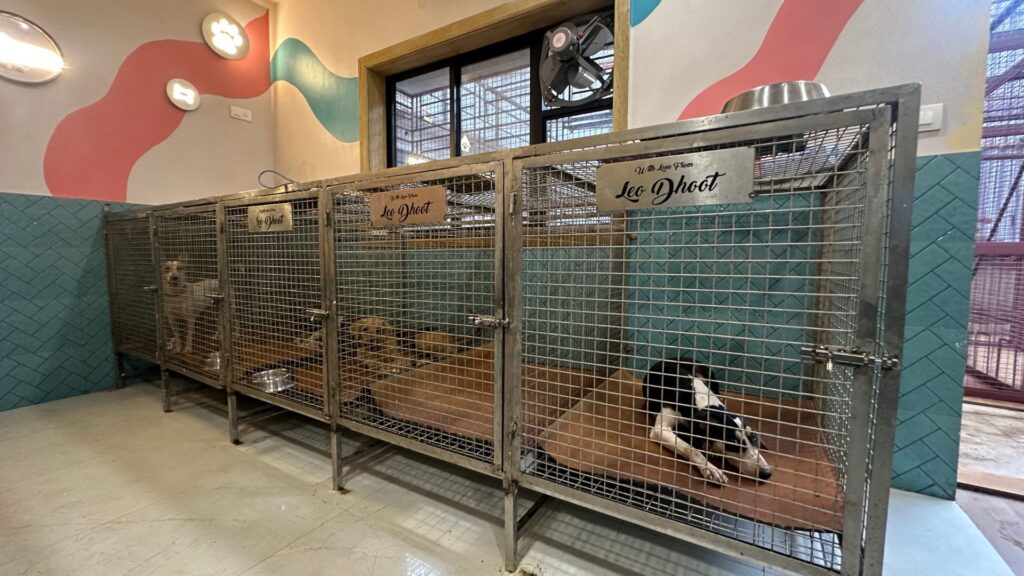
The mechanics of animal birth control follow a fixed sequence, often shortened to CNVR: Catch, Neuter, Vaccinate, Return. This isn’t unique to India either. The same core logic sits behind dog population management approaches recommended internationally, since removing an animal permanently only opens space for another to move in.
The table below shows how a single dog moves through the programme, from start to finish.
| Stage | What happens |
| Catch | Dogs are humanely trapped from a defined locality using nets or catching poles. No force, no injury. |
| Neuter | Surgical sterilisation is performed at a recognised ABC centre, with female dogs prioritised for faster population impact. |
| Vaccinate | Every dog receives an anti-rabies vaccine before release. |
| Mark | An ear notch identifies the dog as already sterilised, so it isn’t caught again. |
| Return | The dog is released back at the exact spot it was picked up from. |
Role of the ABC centre near you
Every recognised ABC centre near me is expected to have a functioning operation theatre, post-operative recovery kennels, and trained veterinary staff. Under the stricter 2023 norms, these centres also need CCTV coverage of the animal-holding areas, so the process stays accountable.
Recovery typically takes a few days before a dog is fit for release. During this window, residents are usually informed in advance so the return doesn’t come as a surprise.
ABC rules for dogs: the legal framework
India’s ABC rules for dogs are not just guidelines. They carry the full weight of the law. The current framework is the ABC Rules 2023. The central government notified these rules on 10th March 2023, under the Prevention of Cruelty to Animals Act, 1960.
Key points of the ABC Rules 2023
These rules replaced the older 2001 framework. They also tightened several gaps.
- Only organisations formally recognised by the AWBI are allowed to run an ABC programme.
- Municipal corporations must run the ABC programme together with the Anti-Rabies Programme. They can’t be run as separate efforts.
- Animal birth control monitoring committees are formed at the state, district, and municipal levels. Their job is to oversee compliance.
- Feeding community dogs falls under Rule 20. This responsibility goes to Resident Welfare Associations, Apartment Owners’ Associations, or local bodies.
- Euthanasia is only allowed for dogs that are incurably ill or mortally wounded. A local monitoring committee must certify this first.
Why is the relocation of stray dogs illegal in India
This point needs its own space. It’s the part of the law people misunderstand the most. The Supreme Court ruling came out in August 2025. It made one thing clear: sterilised and vaccinated dogs must go back to where they came from. Not to a shelter. Not to a different part of the city.
Earlier that year, a harsher order had told Delhi-NCR authorities to round up strays and keep them locked away for good. But a larger three-judge bench reversed that order within days, according to Animals 24-7. The judges said removing all the dogs just wasn’t practical; India doesn’t have enough shelter space for that. Instead, the court told local bodies to focus on one thing: scaling up sterilisation drives. They pointed to cities that had already seen real results by sticking to steady ABC coverage.
Animal birth control programme in India: How it’s implemented
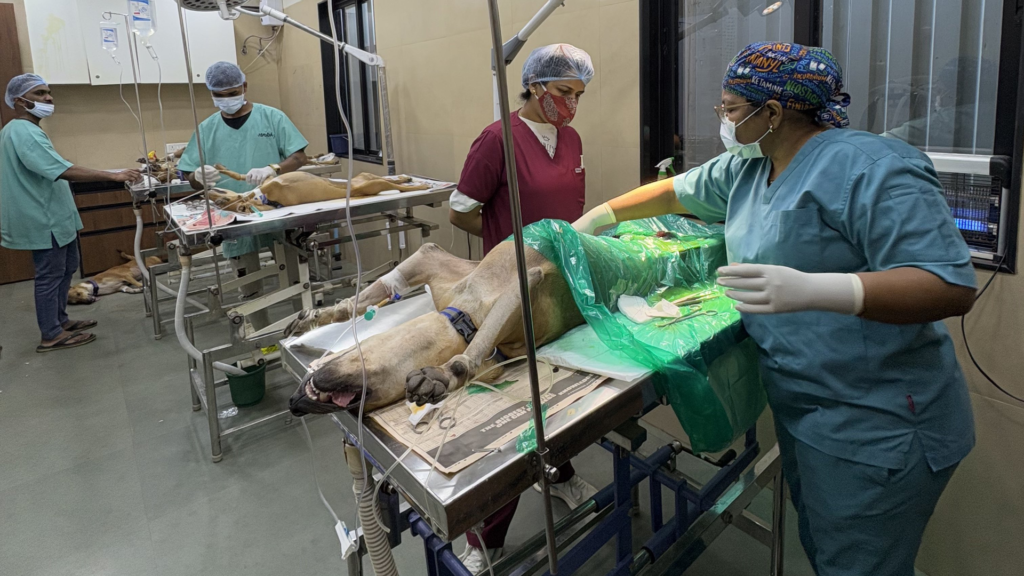
On paper, the animal birth control programme in India follows a clean chain of command. In practice, implementation quality varies a lot from city to city.
Government scheme for stray dogs: funding and responsibility
The government scheme for stray dogs puts the money and the work on local bodies, not on the central government directly. The Department of Animal Husbandry and Dairying sends out regular advisories to push states to act faster. In November 2024, the Press Information Bureau specifically warned about child safety around unsterilised strays.
Municipal corporation dog sterilisation: how local bodies execute it
Municipal corporation dog sterilisation drives usually run in one of two ways. Either the corporation’s own veterinary staff handles it, or the work gets outsourced to an AWBI-recognised NGO under contract.
| Responsible body | Core duty |
| Municipal Corporation / Panchayat | Commissions and funds the ABC programme and maintains stray population data. |
| AWBI-recognised NGO | Carries out catching, surgery, vaccination, and release. |
| AWBI | Grants recognition to organisations, issues national guidelines, and monitors complaints. |
| RWA / AOA | Manages community feeding zones and reports unsterilised dogs. |
Does the ABC programme actually control the stray dog population?

This is the question every resident and policymaker really wants answered. The honest answer? It works. But only at scale. And only when sterilisation coverage stays high all the time.
Sustained, high-coverage sterilisation does reduce puppy numbers and lactating females over time, even if adult population counts are slower to shift. Pairing ABC programmes with rabies vaccination is a well-established approach globally, one that the World Health Organization formally endorses in its guidelines, after early results showed real drops in both street dog numbers and human rabies cases.
A randomised controlled trial published in Scientific Reports found that intensive single-round sterilisation campaigns reaching 58–66% coverage led to fewer puppies, fewer lactating females, and fewer resident complaints about barking, though adult dog counts didn’t shift significantly within the two-year study period.
Modelling research on rabies control shows a related pattern: once sterilisation coverage crosses a certain threshold, the population curve starts bending downward over time.
A scoping review sums up the real goal well. It’s not just about fewer dogs. It’s about healthier dogs and a calmer life between dogs, residents, and the space they share.
- Fewer unsterilised females mean fewer litters each breeding season.
- Vaccinated, territory-stable dogs show less aggression than displaced or newly arrived strays.
- Lower turnover in the population makes rabies vaccination easier to keep up citywide.
The catch is consistency. A one-off sterilisation drive that isn’t repeated and expanded barely dents the population. Why? Because the remaining unsterilised dogs simply keep breeding.
How to find an ABC centre near you or get a stray sterilised
If there’s a stray in your locality that hasn’t been sterilised yet, the process is more accessible than most people assume.
- Note the dog’s location, any distinguishing marks, and whether it already has an ear notch.
- Contact your local municipal corporation’s animal husbandry or veterinary department, or an AWBI-recognised NGO operating in your city.
- Share the details so the catching team can locate the right dog rather than picking up any dog nearby.
- Ask about the expected timeline for return, so your community knows when to expect the dog back.
Take action with Dog Welfare India
Laws and studies only work if enough dogs actually get sterilised, and that depends on people reporting cases instead of waiting for someone else to step in. Have you spotted an injured dog? A new litter of pups? A community that needs an ABC drive? Dog Welfare India runs rescue and sterilisation programmes across Palghar, and every report you send helps us respond faster.
You can also get involved beyond just reporting. Sponsor a dog’s medical treatment or surgery, contribute towards our sterilisation and vaccination drives, or help fund an ambulance for emergency rescues. If you’d rather volunteer directly, we welcome help with feeding, rescue support, and community awareness work on the ground. Reach out through our contact us page; every contribution moves Palghar’s street dogs closer to a safer, healthier life.
FAQs about the Animal Birth Control (ABC) programme for dogs
What is the ABC programme for dogs?
The ABC programme is India’s official animal birth control programme for stray dog population control. Instead of killing or moving dogs, authorities catch, sterilise, and vaccinate them, then release them back to where they came from. This humane, science-backed method is the backbone of every government scheme for stray dogs.
Are the ABC rules of 2023 mandatory for all cities?
Yes, the ABC rules 2023 are mandatory across India. Every municipal corporation, municipality, and panchayat must run animal birth control through AWBI-recognised organisations. This uniform legal framework keeps stray dog population control consistent everywhere. It replaces the older, inconsistent methods some cities used before.
How long does the animal birth control process take per dog?
The animal birth control process usually takes a few days per dog. It covers catching, surgery, and recovery before release. Timelines depend on centre capacity, the dog’s health, and local caseload. Well-run ABC centres near me often finish the full cycle faster, keeping dogs safe throughout.
Is dog relocation legal in India?
No, dog relocation is not legal in India. The Supreme Court orders and the ABC rules 2023 both require sterilised, vaccinated dogs to go back to the exact spot where they were caught. This rule protects territorial balance among community dogs and supports long-term stray dog population control.
How can I request municipal corporation dog sterilisation in my area?
To request municipal corporation dog sterilisation, contact your local corporation’s veterinary or animal husbandry department. You can also reach out to an AWBI-recognised NGO directly. Share the dog’s exact location, description, and any health concerns. Many cities also let residents search for an ABC centre near me online.
Does animal birth control actually reduce stray dog population control problems in the long term?
Yes, animal birth control works, but only through steady, high-coverage sterilisation drives across an entire area. One-off campaigns rarely deliver lasting results. Studies on dog population control in India suggest continuous coverage above roughly seventy per cent is needed to stabilise numbers over time.
What is the recovery and observation period before a dog is released back?
After surgery, dogs typically stay at the ABC centre for a few days of monitored recovery. Staff check the wound, ensure the dog is eating and mobile, and confirm no post-surgical complications before release. Only then is the dog returned to its exact original location, as required by law.
How can you tell if a dog has already been sterilised?
Sterilised dogs get a permanent V-shaped notch on the left ear during surgery under the ABC programme. This simple mark prevents unnecessary recapture and repeat surgery. Field teams and residents can use this visual cue to avoid duplicating animal birth control efforts on the same dog.
Can any NGO run an ABC centre?
No, only organisations specifically recognised by the AWBI can run an ABC centre for animal birth control. This recognition ensures proper surgical standards, trained staff, and humane handling. Before reporting a case, residents should always confirm that their nearest ABC centre is genuinely recognised by the AWBI.
Where can I check the list of AWBI-recognised organisations near me?
The AWBI publishes and regularly updates an official list of recognised organisations on its website. Checking this list before contacting an ABC centre near you helps confirm legitimacy and avoid scams. It’s a simple, free step that protects both stray dogs and residents from poorly run operations.
